This is a long running and continuing journey around a collection of ideas, projects, games, models and a variety of wargaming related themes from my own imagination and from others. As I have been described as having the attention span of a forgetful goldfish you can rest assured the resulting subject matter will be diverse and (usually) entertaining! "He lived in a frenzy of enthusiasm — but nothing lasted for long with him".
Monday, 27 January 2025
Of Ben Hur and Spartacus (with a nod to Gladiator…..)
Tuesday, 28 November 2023
The Nelson Touch
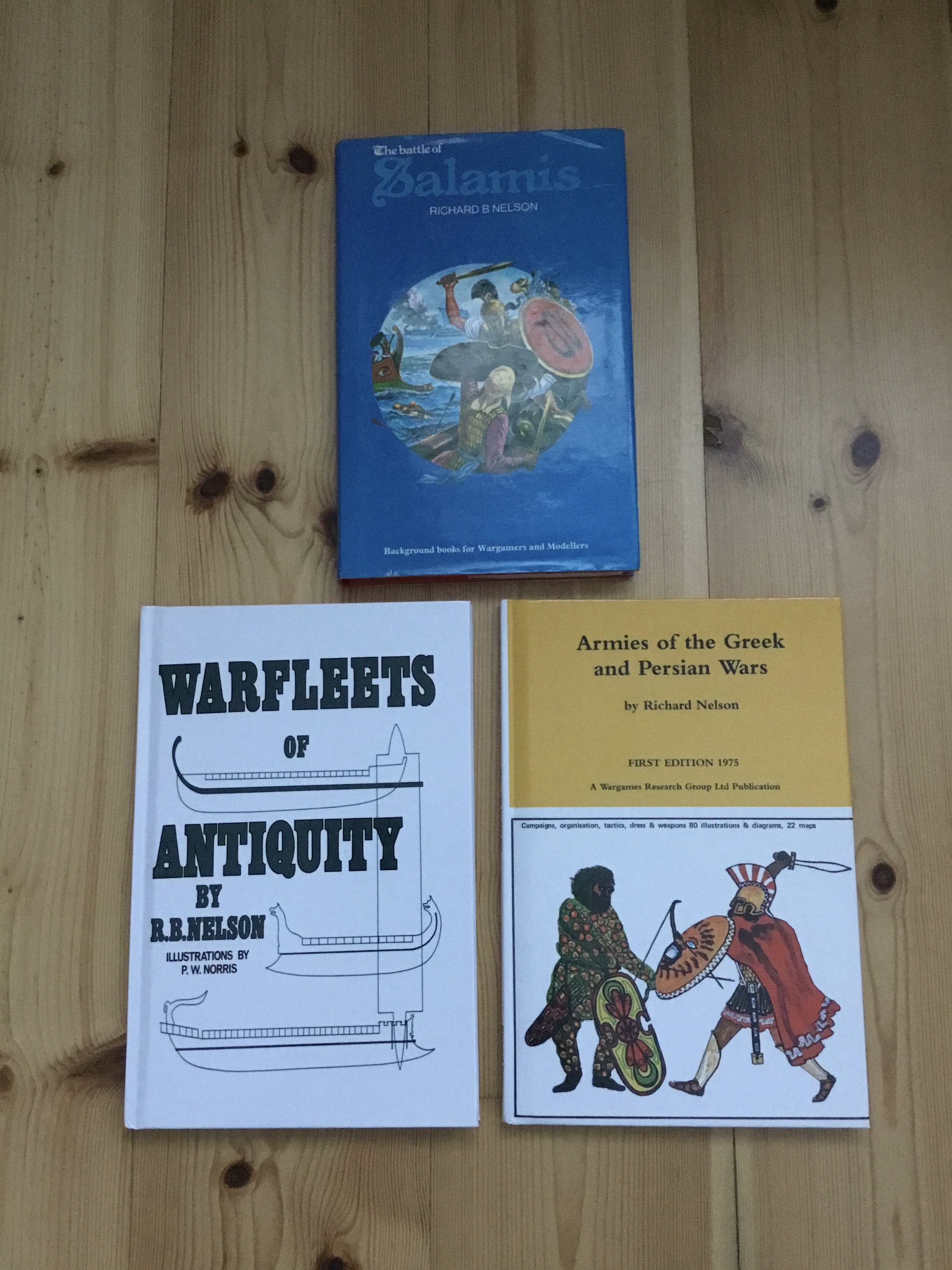
All of these are approaching 50 years old and for sure there is probably more updated material to be found but for all that they are hugely useful. The two titles in the bottom row are recent hardback editions.
No, not THAT Nelson, rather it refers to Richard Nelson - author of the three titles you see above and the inspiration fr my MDF trireme project, focusing on the Battle of Salamis during the Greek and Persian War.
All of these titles are useful in their own way and the book on Salamis is one of my favourite wargaming titles. The Warfleets title also includes the authors ancient naval fleet action rules so again, is pretty helpful in respect of my Salamis project.
Two rather more modern works. The Persian War title fuses extracts from the great historians of the period with a modern overview of the war.
These five titles form my entire ancient naval library although I shall add the relevant Osprey titles in due course to round it out. It is nicely compact and largely self contained.
Ancient Naval Thoughts
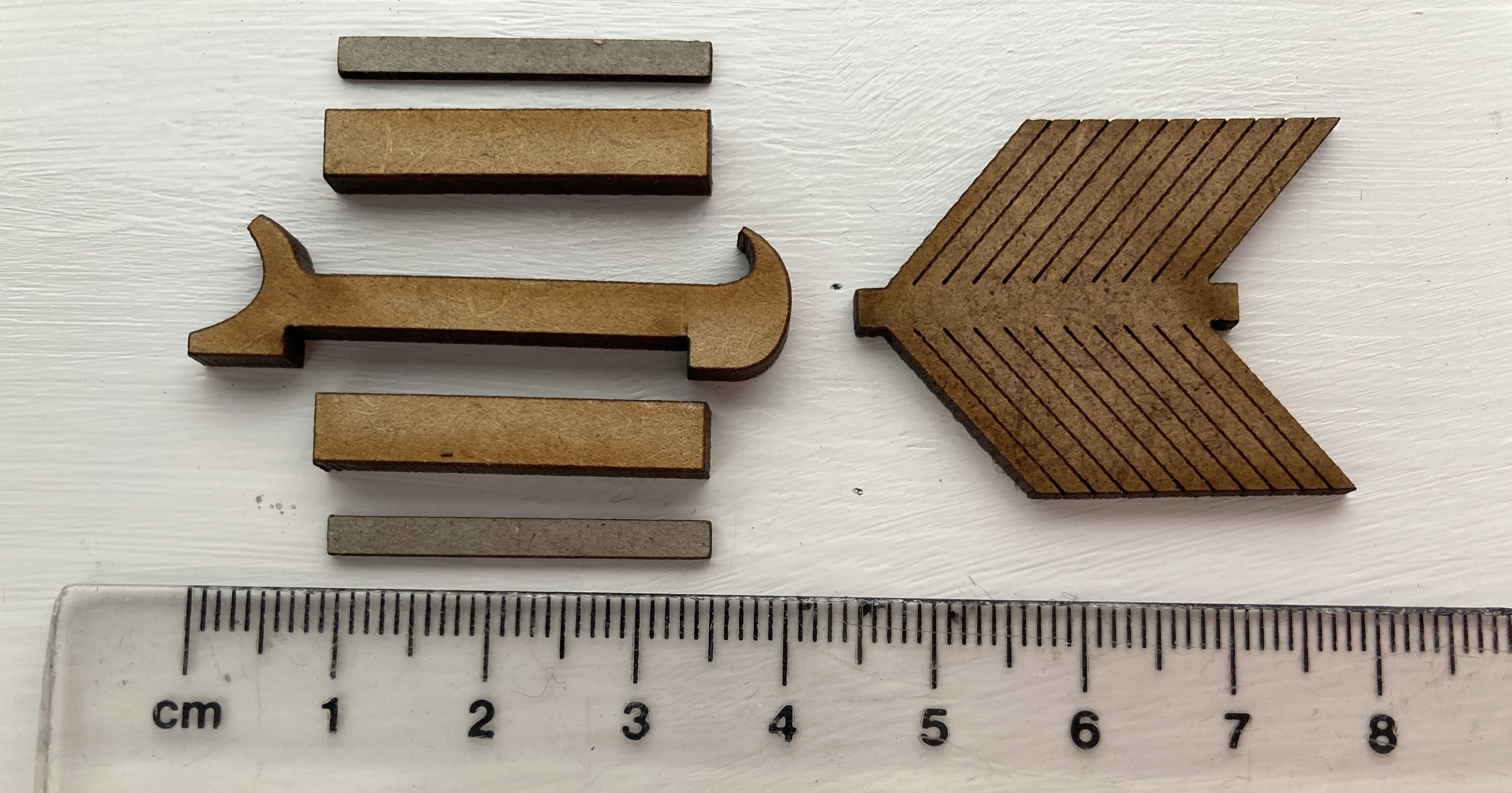
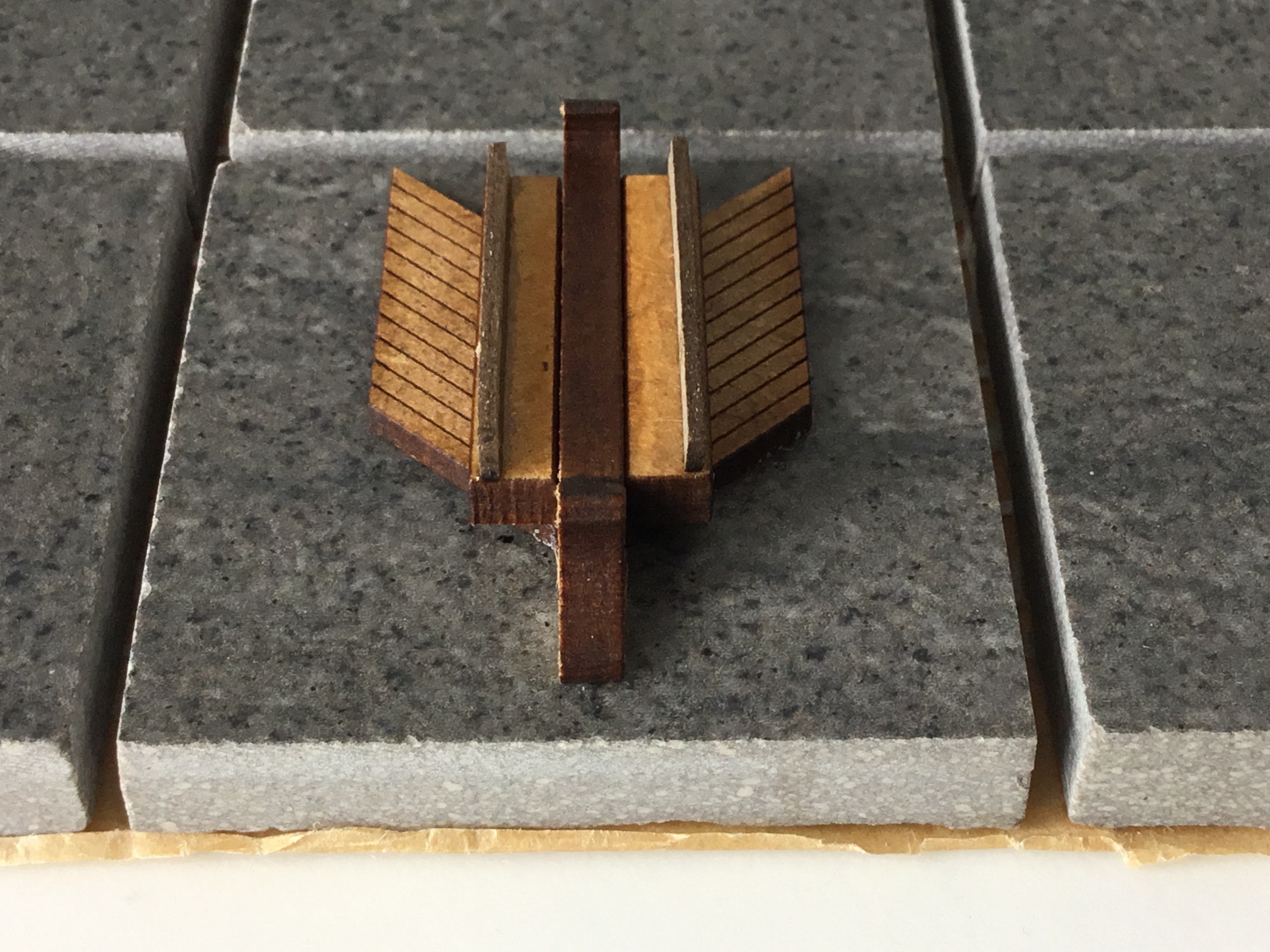
Although my initial plan is for a refight of Salamis I can see no reason why this set up should not cover other actions in the period and indeed, I fully intend to look at other ancient match ups - the Punic Wars could be fun - although I will need to adjust the design for such things as the use of the Corvus or fighting towers and similar. The triremes have been designed without masts but it would be a simple matter to adjust the hull to accommodate them - simply drilling a hole would suffice - and to make some drop in masts and sails. I could not have the holes pre drilled as the hull section is in effect on its side - the top surface of the model is actually the cut side of the MDF. For now though, I will make do with counters to identify if a galley has the sails deployed.
The hexed playing surface will need to have hexes that are 2” across the flat sides for the models (these are 40mm long and designed for one model per hex) which will be handy for when I tackle my 1:2400th WW1 stuff - these models will occupy two hexes.
Plenty of stuff to be getting on with then - I wouldn’t have it any other way!
Saturday, 25 November 2023
Triremes and Salamis
Monday, 4 September 2023
Triremes Ahoy!
Friday, 21 July 2023
The Evolution of a Trireme
A and B incorporated a couple of requested tweaks from me - one of which was inspired by that all round good guy, Kaptain Kobold (thanks old chap!) - but my instructions on certain ares were not particularly clear. The final model will incorporate the hull and oar section from A, with the oars reduced in size slightly, and the out riggers from the third model from the top along with the card ‘screens’ of the same length.
By way of a change I received in the post a couple of days ago two samples of triremes following the first version and which incorporated some minor changes. We are not quite there - due to my rather vague instructions - but the next one will be it. My design process is generally quite clumsy and vague and I am sure that Martin at Warbases must grown inwardly as he sets to work to translate my scribblings into something tangible. Between the two of us we eventually muddle through and I take my hat off to him for his patience!
The final adjustments concern the size of the oars - I have requested a reduction on each side of 5mm as the Kaptain Kobold inspired reduction of the angle of ‘sweep’ from 45 degrees to 60 meant that they stood further out from the hull than previously. I also moved the locating ‘slot’ for the oars forward toward the bow by 2mm so they more central. I reckon this will be it.
I have ordered a single example just to ensure that it is all good to go and once signed off the order will be for sixty ships in total. The rules are more of less complete and the only other thing I need to organise is a hexed cloth (2” across the flats), build a Greek temple and paint the models. Simple eh?
It is when you say or write it quickly!
Tuesday, 4 July 2023
Of Galleys and Hoplites
One of my favourite wargames books - I really need to get a copy of the title that features Waterloo!
The Greek and Persian War that culminated in the naval battles of Salamis and the Greek victory at Plataea via Thermopylae and the 300 Spartans is something I have had a soft spot for many years. I even got as far as getting 15mm DBA armies organised for the two sides although like many good ideas it kind of withered on the vine. At the time I think I was going through a cavalry phase and so an army of Hoplites did not really appeal and with the Persians having plenty of mounted troops but much lighter infantry - I like my cavalry to have a solid core of something heavy to support them - it never really stood much of a chance of being turned into anything tangible. At that point I had never even thought about the naval side.
I remember playing the Avalon Hill game Trireme many years ago and enjoying but again, I never really progressed with the idea of actually gaming ancient galley battles using models.
Fast forward to the present day and now an almighty itch needs scratching - fighting the naval battles set during the Greek and Persian Wars.
But how? I wanted to use models but to be honest did not really fancy anything commercially available despite there being some lovely ranges about. So what to do? A few years ago at a toy soldier show in Sidcup, Kent a club was putting an an ancient naval game using a version of Command and Colours and galleys built from bamboo barbecue skewers. It looked fantastic and so the seed was planted.
Fighting an ancient naval battle
Salamis has exercised a peculiar fascination for me for a variety of reasons and Richard Nelson’s book, despite being published some forty eight years ago, has really served to ‘stoke the obsession’. I would happily use the rules included in his book although they are incomplete - the missing parts can be found in his fleet action rules - but this has not proven to be a major issue to fix and yes, I have.
The rules are hex based - always a plus in my opinion - and are designed with one aim in mind - refighting the battle of Salamis with a notional scale of one model ship equalling around a dozen real ones. There is but a single ship type represented - the trireme - although there are variations as to type employed depending on the contingent being used.
So I need a trireme, one that does not have a mast and that would be suitable for use by all the main combatants. It also needed to be able to fit in a single hex. Ideally I would like to use hexes that are two inches (50mm to all you metric types) across the flat sides which means that the model should be around 40mm long. After some assorted scribblings I finally managed to get the following design produced by Warbases and needless to say, I am hugely excited about this!
Wednesday, 7 June 2023
300: Earth and Water
Lurking away in the dim and dusty recesses of my mental project list is an urge to fight the Greek and Persian Wars in some way. The way I had in mind was very much inspired by the campaign set up in Richard Nelson’s book on the battle of Salamis - obviously I was looking at the naval angle. A short while ago I was ready to abandon this project, despite having acquired a pile of 3D printed galleys, as for some reason I could not get the idea properly formed. I put this down to focussing on the ACW ships and the book! Anyways, now that the latter is out in the real world and the former is very close to having this phase completed, I have had rather more thinking space to look at a few things with a clearer head.
Two rather good resources for the naval side of the campaign
Suffice it to say that there are moves afoot to tackle something Greek and Persian war related but I am waiting on something to arrive first of all.
The contents of the box - wooden tokens for the armies and fleets and the Persian pontoon bridge
I saw mention of the game you see above on one of the board game facebook groups I belong to and it is a little belter! Essentially it is a two player refight of the Persian invasion of the 5th century BC - the period that captures Thermopylae, Salamis and Plataea - that is card driven and takes around 45 minutes to play! The game is produced by Nuts! Publishing and the components are top quality. Wooden game tokens, sixteen cards to drive the game (each with a Greek and a Persian section) and an A3 sized mounted map board complete the package (along with the D6 required).
The A3 sized map board. My wargaming gene for the land side is thinking “DBA, DBA, Portable Wargame, Portable Wargame!” At this stage I will not divulge my naval thoughts….
I can say little more about other than to quote the blurb on the back of the box:
“300: Earth and Water is a strategy game for two players, lasting 30 to 40 minutes. Take the side of the Greeks with Athens and Sparta at their head, or play the Persian Empire led by the King of Kings to see who will control the Eastern Mediterranean. Over the course of five expeditions each player must try to control more cities than their opponent.
Every decision is crucially important, from the choice of the right card to play to the moves you make with your troops on the map.
Be the master of land and sea!”
I have a plan for this game in that given that it is in a small box, takes a short time to play and touches on a subject that I know is dear to at least one of my immediate circle, means that it can travel easily and be played with a beer or two to hand.
He knows who is is….
Tuesday, 14 January 2020
Greeks and Persians
The big hardback in the centre is a great fusion of ancient writing - mainly Herodotus - and modern interpretation and covers the entire period of the war from Marathon onwards.
The likelihood of me raising armies for this period is remote but the naval side is a different matter. If I went down that particular path then Tumbling Dice would once again feature and the rules of choice would be hex based.
Sunday, 15 December 2019
Byzantine Intrigue
For my own part my interest in this period is limited and if truth be told probably owes much to the novel Count Belisarius by Robert Graves and the WRG books on the Armies and Enemies of Imperial Rome and the Dark Ages as anything else. The main reason I acquired this game was for the inevitable expansions which should cover the period of the Arab Conquests and the Crusades which I am far more interested in. GMT Games (the producers of C and C Medieval as well as the Ancients and Napoleonics series) tend to produce the base game which has everything you need and the expansions which are not usable on their own. They also tend to add in additional units that would complete earlier armies so in order to ensure that one is fully up to date one is almost forces to buy each expansion as it is released for completeness. Cynical marketing ploy? Perhaps, but then I couldn’t possibly comment....
I have a couple of books in my library covering the wars of this period of history and indeed, many moons ago was looking to prepare an Arab Conquest Army (25mm Minifigs) for use with WRG 6 th edition. I never got around to this but an army consisting solely of Irregular A fanatics would have been fun to use!
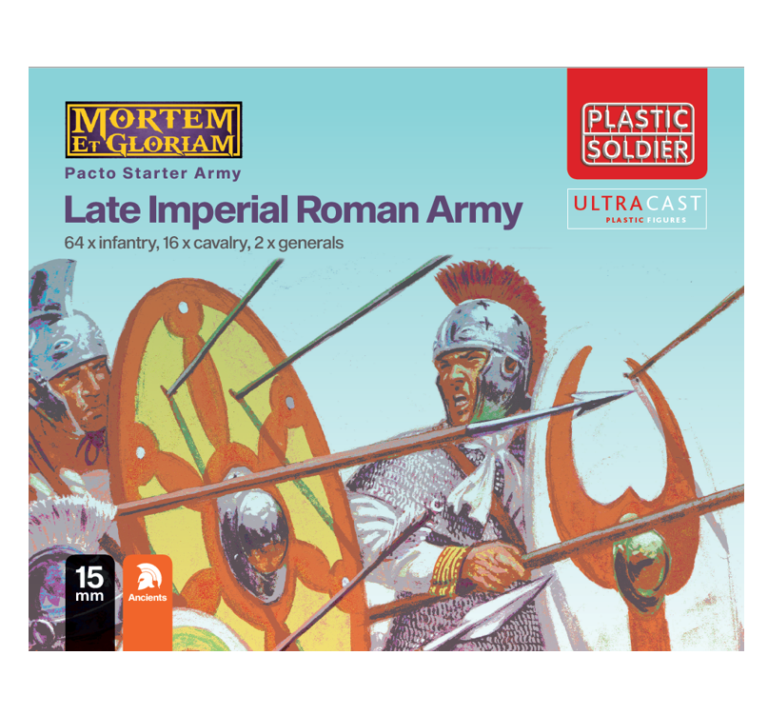
Coincidentally, at least coinciding with the not-so-recent release of C and C Medieval, comes the following batch of goodness to be released next year by the Plastic Soldier Company.
Monday, 15 April 2019
"A beast approaches, and it was King Leonidas himself who provoked it."
Sunday, 10 July 2016
Boot Sales and Blocks
Sunday, 5 June 2016
Contemplating My Naval(s)....
I was delighted when Osprey announced that they were going to release a set of ancient naval warfare rules and so acquiring a copy was an obvious step for me. The rules, called Poseidon's Warriors - Classical Naval Warfare 480 - 31 BC by John Lambshead, look really good. They are designed for large actions and the rules are fast play for sure. They are not even hex based....Players use squadrons - 5 vessels for the trireme era - and alternate moving these depending on the initiative.
This makes for a very interactive game and places a premium on good tactics.
The book contains not only the rules but also a naval timeline and suggested historical match ups. There is a nice selection of eye candy although if I was being picky I would have liked to have seen some models other than Rod Langtons in action. Don't get me wrong, Langton's models are lovely but my entire collection consists of Navwar models which are less detailed but are easier on the wallet. I will certainly be getting some of his terrain pieces though! My plan is now to use these rules for Salamis - so hexes will not be featuring.
The next acquisition is a couple of books concerned with Jutland. I must thank Dave Manley for recommending the Nick Jellicoe title - it really is a first class read - and I have to say I enjoyed the BBC documentary featuring the author. It also leads nicely into The Jutland Scandal. This book is really two books in one as it contains The Truth About Jutland by Rear-Admiral J.E.T Harper and also The Jutland Scandal by Admiral Sir Reginald Bacon. Needless to say certain historical figures did not come out particularly well in either title - and that is a story all of its own.
Thursday, 17 March 2016
Command and Colours: Ancients
I have dabbled in ancient war games since the early 1980s. I first cut my teeth using WRG 6th edition and had many interesting games using these rules. My first two armies were Carthaginian - one in 25mm and soon after one in 15mm. The 25mm version came from my old friend Chris Hardman and was a mixture of Minifigs, Garrison and probably a few Lamming figures thrown in for good measure. When I acquired it from him all I needed to do was to round up a couple of units and tackle some rebasing and in short order it was in action.
Some time ago I acquired a copy of the Richard Borg designed Command and Colours: Ancients. This has been a successful series and covers warfare in the ancient world from the time of the Hoplites until the fall of Rome. the basic game covers the Punic Wars and the expansions cover the wars of Alexander and his Successors, the rise of Rome and the end of the Hellenistic era, the wars against the various Barbarians, the wars against the Persians from the Hoplites until Imperial Rome and the final stands of the Legions. In common with the other Command and Colours games the action is card driven and the units follow the usual 4, 3 and 2 block size standard.
Aside from the official scenarios contained in the rule books the game is really well supported with a whole world of internet based goodies - rules variants, army lists, scenarios and much else besides.
I have in addition to the base game a whole pile of blocks from the expansion sets so the collection is pretty complete. With the material I have to hand I should be able to fight pretty much any kind of ancient battle and whilst this will not be my main area of endeavour it certainly gives me something a little different to dabble in. I am not expecting to go down the figure route with this as the blocks are perfectly adequate.
Hopefully I may have better luck with the Carthaginians than I ever did using figures all those years ago!
Friday, 13 November 2015
Salamis....Part 2
Tuesday, 10 November 2015
Salamis....Part One
One of the particularly helpful benefits of my recent Heroscape acquisitions has been the greatly increased number of blue 'water' tiles I have accrued. I now posses over 250 and this will give my small scale model naval games a major boost as these can look a little lost in a standard Hexon tile. Going forward the plan is to use the Heroscape water tiles in conjunction with the normal land based version to be able to models river banks, coastal areas and such like. My interest initially centred on the ancient period and the use of 1/1200th galleys but I am already thinking about 1/2400th for the Armada, the Anglo Dutch Wars (I bet you did not see that one coming!) and possibly the ACW/Victorian naval. Taking it further forward in time possibly even WW1 and WW2 using 1/4800th or 1/6000th but that is a long way off.
I guess it may have been easier just to get a plain blue hexed mat for naval games but for me that misses the point. I like the idea of having some land as terrain - either riverbanks or coastline - especially as many of my gaming ideas involve combined operations and similar. Heroscape lends itself very well to this approach and for me offers a lot of potential.
I have acquired a modest collection of Navwar 1/1200th ancient galleys - including some later types for the Punic Wars - and am looking to use these for a refight of the battle of Salamis. This was one of the most significant naval battles in history and my inspiration for this project has come from various sources. Many years ago I used to play the Avalon Hill game Trireme which was huge fun. I never used models but always planned to do so at some point. Fast forward a few years and I had the good fortune to pick up a copy of Richard Nelson's book on the subject published in the Battles for Wargamers series. A copy of his fleet action rules published by WRG appeared courtesy of EBay and a copy of Warfleets of Antiquity from my good friend Chris Hardman.
The rules from book by Richard Nelson are in effect a cut down version of the WRG set. they feature enough detail to cover the refight of the actual battle and in terms of the number of ships involved he uses a scale of 1 model equalling 12 actual ships. Based on the sources he has used this translates into 54 models - which is eminently achievable. I only need a further 16 triremes from Navwar (not as detailed as Rod Langton but a lot cheaper!) and I will be good to go.
I will have to make some important decisions about the models. They are all going to based on a 40mm by 30mm base with the nationality and number as a label. That much I have decided upon but the main area of contention concerns sails. Do I have them mounted on the ship or do I leave them off? The former would look better but the latter is more historically accurate. I did toy with having them detachable but in 1/1200th they are a little on the fiddly side. An associated problem is there is a huge hole in the deck where the mast is stepped which is quite an eyesore without the mast in place. Of all the options I am leaning towards having the masts in place - simply because the models look nicer.
Ah but what of Jutland? I can almost hear a collective sigh as yet another project is launched. I shall be tackling something Jutland based to commemorate the anniversary next year but it is unlikely that models will feature. Salamis however is a lot more achievable and so my naval efforts will be focusing on this for the next few months. the final models will be acquired at the weekend.
Wednesday, 28 October 2015
More on Heroscape
Monday, 8 June 2015
Favourite Rules
For myself as it stands at present the two types of rules are probably unsurprising - namely Command and Colours and DBA. It is easy to see why. Both sets are readily usable for a variety of periods and still yield very gameable results - using DBA as an example who would have thought that they could have been used (and abused) for so many different periods? Clearly this is a set of rules of no common clay! The same could be said of Command and Colours.
I am going to put this challenge out into the Wargames ether. I would love to hear about your top 5 sets of rules (and why) and to set the ball rolling mine are listed below. There are no prizes as this is just a little bit of fun. These are in no particular order as this is not a poll as such.
1. Charge! - nostalgic for sure but enormous fun all the same
2. Battle - often imitated but the original probably did more for WW2 gaming than anything other set I could think of.
3. DBA - taking figure gaming into a whole new abstract direction and for the huge number of derived sets
4. Command and Colours - many of the DBA comments could be applied to this system
5. Ship of the Line - these were the rules that inspired Wooden Ships and Iron Men. The combat and damage system for naval combat was absolutely first class and spawned a host of other sets.
Significantly the authors of three of my top five are no longer with us but their legacy lives on. These are very much my personal choices so I am not looking for criticism! It would be fun though to hear about other gamer's choices.
Saturday, 6 June 2015
Ancients Revisted
Sunday, 5 January 2014
Greek and Persian Galley Stuff
Way back in the first half of last year I was mooting the possibility of tackling some ancient galley action in conjunction with the appropriate parts of Command and Colours Ancients. My period of choice was going to be the Greek and Persian Wars and this was inspired by the acquisition of Richard Nelson's books on Salamis, Warfleets of Antiquity and his hex based fleet action rules published by WRG.
My thoughts initially were to use a more detailed set of rules than those published in his book on Salamis but now I am not so sure. My original post More on Ancient Naval Warfare Rules outlined some of my thinking but as I am now looking to include the naval side in the campaign as a whole (which I am sure you do not need reminding included Thermopylae and Plataea). Richard Nelson includes rules for handling the Persian invasion on a strategic level which could easily be translated into Command and Colours forces as well as the fleets involved. It would not need a huge amount of work to get ready - in fact the only issue I currently face is painting the 60 odd galleys required.
I am looking to tackling this as the land side has always interested me and so having both elements available to game would tick a number of boxes.
Monday, 9 December 2013
Ancient and Renaissance Blocks
I have previously mentioned that I have played ancient games on a number of occasions and have owned Carthaginian, Ancient Indian, Gallic, Viking and Late Imperial Roman armies over the years. At the present time I do not own any painted ancient armies - in fact, the only ancient exposure I have is a complete set of all the Command and Colours Ancients series of games by Richard Borg (as I do for most of the Napoleonics as well). Now you could be forgiven for thinking that as devoted block user having these units available via the games would be sufficient for my needs. To be honest I certainly thought so but now am not so sure. The Command and Colours blocks are really good to look at but my feeling now is that it would be more in keeping with my current usage to use blocks of my own design.
Initially when I thought about this my head quickly became filled with a myriad of unit type permutations - pikes, spears, javelins, archers, swordsmen etc - which threatened to derail the entire idea or at least making it incredibly complicated. I then stepped back and thought about it rationally (which sets a rather dangerous precedent for me!).
Now that I have added some distinguishing marks to the existing horse and musket blocks - the black and white stripes - I should easily be able to differentiate between troop types so, for example, I could have Roman legionaries, auxiliary infantry and assorted allies represented readily enough. The same principle could be applied to cavalry so everything from Pathian Cataphracts to Numidian light horse can also be tackled simply by designating the appropriate label as the specific type required.
I must confess that my thinking was helped somewhat by referring to my copies of both DBA and HOTTs for reasons that are easy to see. As both sets of rules merge similar troop types into unit categories it makes it a lot easier to represent units using blocks - as long as they are clearly defined beforehand. This is something I will need to work out but to be honest, will be fairly straightforward to do by making use of the aforementioned different labels types and by standardising unit compositions in some way.
The biggest single problem I am facing with tackling this project is how to represent formed bodies of troops are with ranged weapons. The horse and musket era assumes that all infantry types are armed with a firearm of some kind (excepting those blocks used for native types - Zulus etc) but in the earlier period having having some way of identifying separate 'shooters and fighters' is required. After thinking about this I have decided that a new label type, based on the standard infantry label, will need to be designed. This will enable units of formed shooters to be represented and, by dint of the idea I am currently pursuing, will also double for pike units during the Renaissance period where the standard infantry block can be used as per its more usual horse and musket incarnation.
I realise this may seem a little on the confusing side for which I can only apologise but once the new block type is ready it will all make a lot more sense.
The plan is to tackle the ancient (taken in its 1500 and earlier guise) era and also the Renaissance in some fashion - simply because the lure of the Ottoman Turks of the period is something that I am unable to resist.