Showing posts with label (Funny) Little Wars. Show all posts

Thursday, 2 November 2023

Better Paint than Never!….Part 2


A Hurricane sporting the iconic early war Battle of Britain style camouflage used by the RAF. 

My second set of Vallejo paints, this time for the RAF, arrived yesterday evening - and rather nice they look as well!


The back of the box sporting a selection of types.

At present I have eight Hurricanes and four Spitfires but am seriously investigating whether or not I could source a Bolton Paul Defiant, just for the sheer hell of it! On the Axis and Allies Angels 20/Bandits High group there is a spreadsheet that covers a wealth of aircraft types for WW2, far beyond the ‘official’ types depicted in the game which is really useful. As spreadsheets go it could use a little tidying up and reordering so I will have a go at that and will eventually print a copy off, along with the fan produced bomber expansion.

In other news my cloth arrived and will be going straight back for a refund unless an exchange is an option. The quality is excellent but it is a seascape with hexes that are not white but pinkish! I could have used it but for the pink hexes….


Monday, 21 February 2022

One Million Years B.C., Tusk and the Palaeo Diet


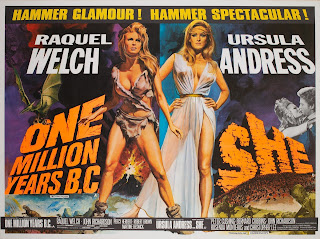
What can I say? I saw this at the cinema as a dinosaur obsessed young boy but now as a adult I can better appreciate the historical accuracy, the tender human interest and sparkling dialogue - not to mention a couple of other assets….So we know humans were not around when the dinosaurs were but why let such a detail get in the way of a good story?

A number of bloggers have been dabbling with a set of rules published by Ganesha Games under the title Palaeo Diet - Eat or be Eaten. The subject is basically a pre-historic hunting style game that is ideal for solo gaming or co-operative play. It requires very little in the way of material - perhaps a dozen or so hunters and their targets and if one is not too fussy then happily using cheap plastic dinosaurs would be a great option.

In short, it is an ideal game for those limited in space, time or resources or those that do not enjoy painting vast amount of figures - like me! If I was not able to paint up a couple of dozen cavemen I may as well give up one and take up something rather like collecting antique snuff boxes or similar….

Anyway, inspired by the efforts of the good Kaptain Kobold as well as the legend that is the Jolly Broom Man I took a cheeky look at the Ganesha Games website and before you knew it I had pulled the trigger on a PDF version for a paltry USD 10. As a side note whilst buying PDFs is a great idea it is also more than a person of my notoriously feeble resolve can bear - this is why I try to keep away from the Wargames Vault if I can (and usually fail I should add….).


I actually saw both of these in the double bill you see above and remember being quite freaked out by the scene in She where ‘she’ - spoiler alert - turns into a very old woman. Raquel Welch and Ursula Andress in a double bill at the peak of their powers. More than mortal man deserves!

The first thing that struck me about the Palaeo Diet rules is their size - some 58 pages. They are nicely laid out with some wonderfully whimsical ‘cave painting’ style illustrations and with plenty of caveman style names in use for the examples of play. There are scenarios with some quite tongue in cheek names as well as the inevitable play sheets. It all looks straightforward enough and eminently playable and when I noticed the name of the author I could see why. 

Nicholas Wright has penned a number of Ganesha Games titles including Galleys and Galleons which are a really good set of naval rules for battles in the age of discovery - say the 16th and 17th centuries.

I plan to knock up a modest set up for this using 15mm figures and so I turned to the Irregular Miniatures website as I recalled a similar set of rules from a number of years ago covering a similar genre (although expanded to include Victorian dinosaur hunting) called Tusk and written by Matthew Hartley. Sure enough the rules and the battle packs are still available so with my resistance level at an all time low I placed a very modest order with them. Tusk was expanded to include Sci Fi and Pulp (Tusk 2 The Wrath of Kong and Tusk 3 Steel Tusk) settings and Irregular Miniatures issued a number of expansion figure pack to go with the rules.

Purely in the interests of high quality and detailed research I watched the 1966 Hammer classic One Million Years B.C. starring Raquel Welch which was a real blast from the past. Aside from the dinosaurs - Ray Harryhausen at his finest - and a very dodgy Iguana and a Tarantula it was actually not a bad film. I had forgotten most of it from having seen it at the cinema years ago but it ticked the boxes in respect of certain elements of how we would imagine early man lived - bear in mind I am saying certain elements!

I would have enjoyed watching She again - I did not know that a follow up was made in 1968 but with different actors called the Vengeance of She - and of course She is the inspiration of SWMBO or ‘She Who Must Be Obeyed’….


Classic swinging 60’s Sci Fi and the inspiration for the band Duran Duran. 

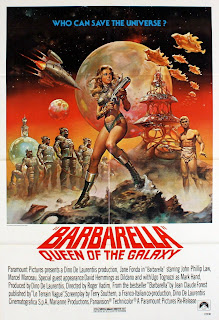
After having watched this and made some Stone Age style plans I then sat down to watch another classic from the swinging 60’s - Barbarella starring Jane Fonda. Now there is an idea for a game or two…

So my Saturday evening was spent watching Raquel Welch and Jane Fonda with a side dish of remembering Ursula Andress whilst planning some cave man gaming.

As Jack Nicholson said when playing the Joker in Batman….

“Gonna need a moment alone boys…..”


Sunday, 31 October 2021

The Joy of Genealogy


The San Josef in Spanish service

 I have posted previously about my grandfather and his service in the Royal Navy from 1919 to 1945 some time ago - you can read about this here. Staying with the naval theme I was quite surprised to find out that a previous generation of my family also served at sea - during the Napoleonic Wars in fact. 

A cousin of mine has been working on the family tree on my father’s side and it appears that Thomas Crook (baptised 1782 from the village of Berry Pomeroy in Devon) served aboard H.M.S. San Josef - a 114 gun Spanish first rate captured at the battle of St Vincent and later the flagship of Sir Thomas Duckworth. I do not have any details of the extent of his service and given that in all probability he was a farm labourer I cannot help but wonder if he was ‘pressed’ into service. I would certainly like to find out more about him.

So it seems like my family on my father’s side originated in the West Country but headed east during the course of the 19th century - presumably to find work. Thomas’s son George (b. 1834) married in Erith, Kent in 1861 and after a brief sojourn in Prittlewell, Essex (according the 1881 census) were, by 1890 running the The Plough - a public house in Chelmsford. One of his sons, Lewis, moved to Walthamstow where my grandfather, Alfred, was born in 1901.

There are a number of coincidences in all this. For a short while I lived in Belvedere which is just up the road from Erith and I currently live quite close to Prittlewell and am not that far away from the Plough in Chelmsford. Small world isn’t it?

Sunday, 1 October 2017

Leipzig on the Lawn - A personal review

On Saturday 23/09 I was fortunate enough to take part in a refight of The Battle of Leipzig, 1813 at a secret central London location. There was in excess of 2,000 54mm figures and the rules in use were Funny Little Wars - an updated version of H.G. Wells original Little Wars with a Napoleonic twist. The action was fought on the lawn and together with the two umpires there was around a dozen of us with yours truly taking the part of Napoleon. the full list of dramatic personae looked something like this :

Umpires - PW and Tim Gow
Combat photographer - Bob Cordery

The French
The Corsican Ogre - Yours Truly
Murat - Eric Kemp 
Ney - Mike Lewis


The Allies
Schwarzenberg - Brian Carrick
Blucher - Russell King
Bernadotte - Conrad Kinch
Barclay de Tolly - Mike Snape
Wittgenstein - Jack Wright


Leipzig city centre - complete with the Imperial Household and the baggage train in the distance

There will be other blog posts about this epic encounter together with some rather better quality photographs of the fun but I wanted to write about the game from a rather more personal perspective.


French Cavalry under the command of Murat (Eric Kemp) - the figures were generally accepted to be the nicest painted models in the game


I was supposed to attend a similar event at the same location and dramatis personae back in 2015 when a refight of Waterloo to coincide with the bicentenary was undertaken but sadly had to pull out at a late stage. I was taking no chances on missing out this time though and so it was I took part in a game that has made me look long and hard at pretty much everything I thought I knew about wargaming and how to fight battles with model soldiers.


Allied cavalry supporting the Swedes under Bernadotte (Conrad Kinch) prepare to administer the coup de grace to the remnants of the Imperial Guard - but at a heavy cost.

The battle itself took place over some 5 hours of game time and started on the second day of the actual battle. This meant that the allies were in contact with the far flung French outlying forces almost from the outset. The French plan was simple - wait until they were rolled over and then retreat with what was left. It succeeded rather too well and at the conclusion the baggage train and the imperial staff were last seen heading towards Dresden and a single unit of cavalry and perhaps some of the guard possibly following.

In truth the French lost faster than the Allies won and at times one was almost reminded of the old arcade game Space Invaders.

The game had everything - high drama, massed cavalry battles, furious melees and some very random shooting. Normal artillery was handled using the time honoured matchstick firing model - in this case a 25pdr - whilst for canister rounds good use was made of party poppers - which was enormous fun for all concerned!

My own role as the Emperor during the early stages of the battle was merely to sit on my hands in Leipzig brooding magnificently, ideally with a Rod Steiger like vacant scowl. I also make a point of quoting every line I could remember from the film Waterloo or attributed to Boney himself - sometimes the comments were even appropriate. For example, in response to a written message from Ney asking whether or not he could engage the approaching Austrians  was responded to with the following missive "Engage. The salvation of France is at stake". I like to think of it as method wargaming....

Special mention should be made of the tussle between the Guard and the Swedes. Despite being outnumbered the Guard fully lived up to their reputation and significantly out shot their doughty opponents. Perhaps mindful of his political position Bernadotte (Conrad Kinch) tried not to cause too much damage to the French although the Guard had no such qualms when firing back....

The sole British unit - the Rocket Troop, assembled by Tim Gow - fell victim to an overshot French artillery barrage - the round in question completely missed the intended targets but such is the way of Little Wars errant artillery....

Camaraderie, good natured banter, lots of figures, good weather, great umpiring, beers, sandwiches, tea and scones and the chance to recreate in some small way a piece of history - what is not to like? Indeed, plans are afoot to conduct another game at some point next year and I only hope that I will be able to participate.

For my own part one of things that came out of the affair was they 54mm figures - even with a simple, flat paint job (old school style) - look quite splendid when deployed for action. Now I am not saying that I will be going full on Little Wars but using a modest number of figures on a 6ft by 4ft table, probably gridded a la Cordery/Morschauser, would certainly look the part.

Much to think about I assure but in the meantime a big thank you to Tim and PW for making it possible and all of the cast and crew - especially my two long suffering subordinates - for making the whole day a memorable adventure.

Wednesday, 30 May 2012

Passing the Khyber and Collecting 200 Figures


The Roghan valley - serene, peaceful and quiet (at the moment).

The North West Frontier has been very quiet of late and I am sure that suspicions in various quarters are abounding with the prospect of myself, as usual, having gone cold on the idea and to be looking to offload the whole lot at a knock down price. To be fair I have been guilty of this on more than one occasion over the years but, in my defence, the Roghan Valley project is very much a long term idea and so progress will be modest and occasional. Suffice it to say moves are afoot and I could not possibly comment any further.... I need to add some additional figures to round off the units so three more boxes of AIP figures will suffice to finish this stage of the acquisition process. I have also acquired suitable paints for the figures - this in itself was a challenge simply because of my time warped 1973 enamel based painting technique being largely unsuitable for 54mm soft plastic figures!

Models aside though, the first actions to take place in this area will be using the block armies in any event and so watch out for some stirrings in the hills as the Jalfrezis consider their opening (and no doubt diabolically nefarious) move against the hated infidels.

Friday, 4 May 2012

Going to your God....


                                     When you're wounded and left on Afghanistan's plains,
                                     And the women come out to cut up what remains,
                                     Jest roll to your rifle and blow out your brains
                                     An' go to your Gawd like a soldier.


I cannot tell a lie - it was not me that painted the above but my very good friend Mr Hardman. He was intrigued at my idea of a 54mm NW Frontier set and wanted to see how an Armies in Plastic 54mm figure would come when painted in a simple style and using the Army Painter dip. The result you see above. I should point out that Mr Hardman is a painter par excellence and the above was a quick try out and is therefore well below his usual standard - which is turn still light years ahead of anything I could produce! The figure was sealed with Woodland Scenics Scenic Cement and flat painted in Vallejo acrylics with an Army Painter Dip to finish off with (brushed on!) Interestingly he did no work on the base other than to Army Painter it and it looks fine! The only problem with that would be the fact that some of the figures I shall be using are in non scenic coloured bases so will require painting.

My thanks for Mr Hardman for the job he did on this and if it does not serve to provide a reasonable incentive to crack on with the inhabitants of the Roghan Valley then I don't know what will!

Friday, 16 March 2012

The Roghan Valley, North West Frontier, 1895....Part 2

Of Gaming Considerations

The early foundations are in place in respect of the background to my NW Frontier adventures and there will be much more to follow in due course. the one thing I wanted to get 'bedded down' at this early stage though was the type of actions I want to be fighting with the 54mm set up and indeed, other mediums. At the base level there is the skirmish game and not only is 54mm an ideal scale for such activities but there are also a couple of very welcome additions to the idea of such an undertaking. To begin with, the Colonial era is a very fertile source of inspiration for small scale games at skirmish level and so the prospect of table top deeds of 'derring-do' straight out of G.A. Henty and  others would be hard to resist. There is also the compelling factor of not needing many figures to be feasible and this is a very important consideration given the number of figures I shall be needing overall. At this point in time I do not have a suitable skirmish rule set I can use but am sure that I can find something suitable from somewhere.

The skirmish level game obviously lends itself nicely to the continuing back story of the Roghan Valley in particular the exploits of the main characters (and those yet to appear). It also serves to give me a short term focus in respect of what I need to paint and so the collection will be used as it grows.

The next level up will be the 'unit' based game and I am spoilt for choice for rules to use for this. At the moment using a hex based system such as Bob Cordery's Memoir of Battle is my preferred choice but any one of a number of other sets could also make an appearance as the mood takes me. Funny Little Wars will feature in due course - hence the recent acquisition of some 'firing' artillery. I also have in mind a large scale frontier uprising which will probably be fought using the blocks and involve map moves and all the paraphernalia of a full blown campaign.

The first priority though, is to tackle the figures themselves and for that I shall need to invest quite substantially in some acrylics....;-)

Thursday, 15 March 2012

The Roghan Valley, North West Frontier, 1895....Part 1

Setting the Scene....The North West Frontier, 1895


The Roghan Valley - note the entrance to the Dhansak Pass with the Black Mountains in the distance 

Some fifty miles due east of Peshawar and twenty miles from the railway to India lies the Roghan Valley, the traditional homeland of the Basmatis. This peace-loving and deeply spiritual tribe have farmed the Roghan Valley for generations; its fertile land watered by the Tandoo River and warmed by the tropical sun. Fruits and vegetables of all kinds grow in abundance and rice is harvested in the lowlands near to the river. Of course such a treasure in a hostile and harsh environment would never be left to its own devices and so the Basmatis have been conquered innumerable times over the centuries as their bounteous land attracted successions of invaders. In spite of this the peaceful farmers live on, regularly exchanging one set of overlords for another as the years roll ever onward, in time with the waters of the mighty Tandoo River.


Lurking high up in the hostile peaks a typical group of fearless Jalfrezi warriors prepare to spring yet another ambush

By far the most persistent raiders of the Roghan Valley are the fearsome Jalfrezis. Over the years the Jalfrezis have ruled over the Roghan Valley, exacting tribute from the peaceful farmers but have always periodically been distracted by inter-tribal warfare North of the Dhansak Pass - usually against the Bhunawalis but occasionally against the Yuzahankis. Although the Jalfrezis are redoubtable warriors they are relatively few in number and so such distractions usually mean that they abandon the Roghan Valley to pursue their activities elsewhere, and usually at the expense of the Bhunawalis or the Yuzahankis.

Up until the outbreak of the Second Afghan War the British were happy to pay a subsidy to the Jalfrezis in order to ensure that peace reigned in the valley but when the tribesmen threw in their lot with the losing side during the war the payment was promptly suspended. In the aftermath of the events of the Second Afghan War the British decided to take a more direct line in respect of control of the valley and so a small fort was erected at the village of Dovecot to guard the Dhansak Pass and a garrison installed. The fort was some distance from the Governor's Residence at Disimla - roughly thirty miles away - and so the garrison regularly rotated between the two locations.


The Governor's Residence at Disimla - the foreground is used for the annual cricket match between the Governor's Eleven and a side from the garrison at Dovecot.

For a number of years peace and tranquillity reigned over the valley and so the usual activities of a British garrison town came once again to the fore; cricket matches, hunts and innumerable cocktail parties, balls and receptions of every kind quickly filled the social calender for the officers and senior officials of the outpost. It was a time of golden days and exotic nights with not a cloud on the horizon to spoil things. That would soon change though, and in the most dramatic of fashion.

The Jalfrezis

All the while up in the hills, the Jalfrezis plotted. When not engaged in exacting revenge for a slur against their honour (whether imagined or real) and usually involving much bloodshed; the Jalfrezis where inveterate plotters of the highest order. Much of this stemmed from the generations of having to play one tribe off against the other  merely in order to survive but the current round of continual scheming was centred around one man. The one man in question was none other than the renowned 'Tiger of the Hills', Sher Khanaj. For some thirty years Khanaj had ruled over the Jalfrezis with a rod of iron. He was ruthless in the extreme, brutal and cruel and had terrorised the Basmatis incessantly. Extortion, torture, desecration of holy places, fire and sword were his stock in trade right up until the moment he chose the wrong side in the Second Afghan War. With the humiliation of defeat his reputation was in tatters and so he took to the hills and aside from the occasional nuisance raid on the Roghan Valley has been quiet ever since. Despite his diabolical reputation defeat had mellowed Khanaj over the years and so much of his public bellicose persona was purely for effect. He lived off of his former notoriety and since this was sufficient for a number of lifetimes it meant that is was very easy for him to stir up the tribesman with visions of plunder and glory. He was no fool though and so periodically the sword was unsheathed and fire and bloodshed would result - enough to stoke up the embers of his reputation but seldom enough to cause a response. He shared with his adopted son a passionate loathing of all things British and although in private he no longer believed that anything was to be gained by going to war with them was content to plot, scheme and intrigue against them through the person of his son. In truth, as he grew older his interests moved into more aesthetic pleasures and he became a passionate and enthusiastic poet in the style of (so he liked to think) Omar Khyyam. This love of poetry, coupled with the sensual pleasures of the harem, and served to soften the edges of the old tyrant but all the while, the terrible beast within continues to watch and wait and bide its time.

Shere Khanaj studying poetry - from a ceramic currently in the regimental museum of the Malabar Horse


The fearsome visage of Ram Ditin, the adopted son of Shere Khanaj - his identical twin brother was taken to England where in later life he took to the stage as a comedy actor of some repute 

His second in command and adopted son was a different story altogether and was much like Khanaj in his early days only far worse. Where Khanaj had mellowed in his later years his son, Ram Ditin,  had only grown more explosively violent. He was deadly with a scimitar, a crack shot with a Jezzail and shared with his father a fanatical hatred of all things British. He was secretly plotting (at least he believed so - Khanaj was well aware of this apparent duplicity) with both the Bhunawalis and Yuzahankis to launch a massed attack against the British with a view to driving them from the frontier. Ordinarily this would not have been a major problem as plots like this were usually a rupee to the dozen on the frontier but for two very significant factors. Firstly, Ram Ditin, without the knowledge of his father (and this was absolutely correct), was in contact with the Russians (more importantly Russian gold) and secondly, there was the prophecy of a chosen one appearing on the frontier heralding a brave new infidel free world (under Jalfrezi rule naturally). Ram Ditin was salting the hill tribes with mention of this chosen one in an effort to drum up the support required for a massed uprising. If the spiritual dimension was deemed to be insufficient persuasion for the more undecided of the hill tribes then the prospect of vast sums of gold, courtesy of the Russians, would provide a compelling additional incentive.  Khanaj himself was unconcerned by this latest rumour of a 'chosen one' for the simple reason he already had his own 'chosen one' acting as his own personal spiritual advisor. The self-styled 'Prophet' Abul was as devout and pious as Ram Ditin was mercurial and brutal. His role was to ensure that the spiritual well being of the Jalfrezies was above reproach and that generous donations to the coffers of Shere Khanaj (minus his own commission of course) were regular and forthcoming. Shere Khanaj was astute enough not to enquire as to the level of Abul's commission as the benefits of having a revered holy man in his personal retinue far outweighed any monetary considerations. For his own part Abul played the part of the dutiful and humble cleric in public whilst maintaining a private lifestyle of opulent decadence (his commissions were extremely generous) and with many investments overseas - in case of every eventuality, good or bad.


The self-styled 'Prophet' Abul - the mercenary cleric in the employ of Shere Khanaj

Shere Khanaj was aware of the intrigues of his son but chose to ignore them in the main as he would not dare raise the Jalfrezi banner in anger without his say so and so long as this state of affairs continued then peace, albeit an uneasy one, would prevail.

The Jalfrezis themselves are of Pathan stock and are skilled and deadly adversaries. Their preferred weapon is the long barreled Jezzail and a fearsome array of edged weapons. Most warriors are usually festooned with daggers and scimitars of various kinds and they use them at every opportunity. Their usual mode of warfare is typical of the region; ambushes and raids or long distance sniping. Added to this is the customary charge into contact whilst screaming hideous war cries that is guaranteed to strike fear into even the hardiest of opponents. They are a proud and haughty race and can be by turns the most faithful of friends or the most implacable of foes. As Harry Flashman observed you needed to know to the second when one mood became the other because very often your life depended on it. Aside from the usual weapons of the frontier tribesman Khanaj was extremely proud of his artillery. He had acquired a brace of ex American Civil War 12 pounder Napoleon field pieces (a persistent rumour in the hills was that the Prophet Abul had engineered a deal for the weapons, subject of course to his usual consideration....) which he had used on a number of occasions but thus far not against the British.

Honour and reputation amongst the Jalfrezis is of paramount importance. Any slur against the family or tribal name could never be left unpunished and many a poor soldier has lived to regret abusing a Jalfrezi whilst in his cups for as sure as the sun will rise the following day so he will feel the burning flame of vengeance being meted out on his person.

The Roghan Upland Field Force


The garrison operating in the Roghan valley when in the field goes under the title of the Roghan Upland Field Force as it usually comprises elements drawn from both the fort at Dovecot and the Governor's residence at Disimla. The whole force is equivalent to a slightly reinforced brigade and unusually contains a larger proportion of British troops than usual. The full order of battle comprises the following units:

  • 1st Battalion The Isle of Sheppey Light Infantry 
  • 1st Battalion The Queen's Own Medway Fusiliers 
  • 4th Peshwari Rifles
  • 6th Kashmiri Rifles
  • C Squadron, 13th Malabar Horse
  • F Battery, City of London Artillery Regiment - the Bishopsgate battery
  • One company, Royal Engineers
The whole force is under the command of Brigadier General Sir Charles Vere Cramp - whom, with his wife,  the Lady Isabella Victoria Cramp, also act as the Governor for the valley. The two roles are difficult enough to manage individually but combined are nigh on impossible and so Sir Charles normally leaves the military responsibilities to his second in command - Colonel Bindon Oliver Goff V.C.


Brigadier General Sir Charles Vere Cramp


The Brigadier, whilst still a game old chap, is really past his prime in terms of commanding troops in battle as years of hard riding, drinking, fighting and a couple of bouts of malaria have dimmed his enthusiasm for frontier soldiering somewhat (he struggles to mount a horse even for a parade, in part due to the jezzail bullet through his right leg) and so leaving the martial responsibilities of the region to his second in command, the gallant, suave, much decorated Colonel Bindon Oliver Goff V.C. was the obvious choice to make. Acting in a largely civil capacity has given Sir Charles plenty of first hand experience with which he is hoping to make use of with a nice governership back in India - as far from the frontier as he can get if possible. Certainly Lady Cramp is keen for this to happen and so watches like a hawk over both her husband, the ambitious Colonel Goff and the Jalfrezis with equal attention. She is a most formidable woman and is living proof of the old adage of 'behind every great man, there is a great woman.' Sir Charles is convinced that he is in fact in charge when in actual fact it is the Mem Sahib who is the driving force behind the civil administration of the valley. Possessed of a razor sharp intellect she has the measure of Colonel Goff and his unbridled ambition but is able to contain the worst of his excesses by a combination of charm, practical good sense, diplomacy and downright cunning when necessary.


Colonel Bindon Oliver Goff V.C. - depicted in later life 

Colonel Goff is a regular fire eater and sees the crushing of the Jalfrezis as something of a personal crusade - at least the credit for such an undertaking should see his promotion - and so is provocative at every turn when left to his own devices (and out of sight of the Brigadier and more importantly, his wife). He is largely dismissive of Sir Charles but cannot ignore the influence of his wife and so waits patiently for the chance to demonstrate his martial prowess when, inevitably, the frontier bursts into flames once again.

Of the troops forming the garrison of the Roghan valley little need be said. The British infantry units are both Kent regiments although the rivalry between Sheppey and the Medway is renowned. Both units are near to full strength and are largely old hands of frontier warfare. A peculiarity of the command structure within the Roghan valley though is that the British battalions do not have any command higher than company level due to the fact that it is seldom operating as a whole formation. Each garrison - Fort Dovecot and Disimla - is made up of a number of companies with the garrison commander effectively a brevet colonel as the need arises. The Sheppey and Medway battalions are usually split in two between the garrisons whereas the native infantry are only ever used in complete units. 

The native troops consist of a battalion of the 4th Peshwari Rifles and one of the 6th Kashmiri Rifles. These are supported by C squadron the 13th Malabar Horse. Whereas the native infantry are only ever used in complete units the cavalry are routinely broken down to troop level and are deployed in both locations. 


The Peshwari Rifles at drill


The Malabar Horse in action

Similarly, the artillery and engineers are usually split between Fort Dovecot and Disimla. Whilst the artillery consists of modern weaponry the machine gun complement still consists of Gatling Guns as the newer Maxims have yet to reach the frontier.

Taken as a whole, the troops tasked with guarding the Roghan Valley from the depredations of the Jalfrezis (among others) are perfectly suitable for the role envisaged. They are a well trained and equipped body of men and should, all things being equal, be more than sufficient to cope with pretty much anything short of a full scale invasion. Such confidence is not misplaced - at least not in the opinion of Colonel Goff - and so the officers and men stand ready and vigilant, all the while scanning the distant highlands for any signs of trouble.

In Conclusion

While the sun is busy never setting on the British Empire; the endless round of the social whirl continues to spin and all the while the hills chuckle with the sounds of furtive plotting. Sir Charles hopes for continuing peace, Colonel Goff for war and all the associated glory and all the while the Jalfrezis are veering first one way towards war and paradise and then the other towards peace and sullen subservience. Intrigue and duplicity, skulduggery and double-dealing are all fermenting and bubbling away in the hills whilst the peaceful Basmatis continue to tend their crops and observe their spiritual  devotions and the waters of the Tandoo River continue to flow unhurried, untroubled and ever onwards....


Sunday, 4 March 2012

On the North West Frontier....Part 4

After the general all round buzz of yesterday and the news re the ships today saw yours truly returning to rather more mundane matter in the shape of the huge pile of assorted 54mm figures I have for the NW Frontier. Thus far I have mapped out how I am going to organise the collection and also trialing a couple of painting techniques. I also took the opportunity to open the additional boxes of infantry I had acquired (3 each of Indian, British and Afghan types). The figures themselves are very nice and quite old school in there demeanor but the most obvious surprise was that every single one of the nine boxes had additional figures above and beyond the advertised '20 in 10 poses of 2 each'. Taking into consideration the figures contained in the Fort Kandahar play set I now have an additional 12 figures for each of the three forces! One of the boxes of Afghans contained 27 figures which compensated for the two broken types from another of the boxes.

I don't know if this is usual for Armies in Plastic boxes but it mean that I have an extra 36 figures to play around with - more importantly, I can relegate some of the more unusual poses to the spares box!

Thursday, 1 March 2012

On the North West Frontier....Part 3

It has been a grim week so far. Not in a health way - everybody is hale and hearty in that respect - but on the job front. My contract is up tomorrow and thus far I have nothing else lined up. It is not the end of the world but sadly having to deal with agencies, make a thousand phone calls, send untold numbers of emails and worse of all, listen to the same old drivel over and over again from the aforementioned  agencies! It is soul destroying and so I have been more than a little tetchy as a result.

Still, by way of light relief I thought I would share the details of what has thus far been acquired for the 54mm project. The cornerstone of the collection is the fort.


Fort Kandahar with a few reinforcements

The fort comes in a set with 20 each of British, Indian and Afghan infantry and by way of a bonus my set actually contained 25 Afghans and 24 Indians! In addition I have three extra boxes of each of the infantry sets; two each of Afghan and Indian cavalry and two boxes of British artillery. The infantry have 20 figures per box whilst the cavalry have 5. The artillery sets contain a gun and 5 gunners.

My plan is to organise the infantry into companies of 16 figures and an officer, the cavalry will be in squadrons of 8 with an officer and a gun battery will have two guns and 8 gunners plus an officer. Gamers of a certain age will probably recognise the organisation as being based on that used in Charge! Initially there will be four companies (the Afghans will be organised similarly) per side with the Imperial force having two companies each of Indian and British infantry. For the size of playing area I have (soon to be expanded to 6ft by 4ft) the set up I am planning will fit quite comfortably. There will be some spares earmarked for future use and the inevitable conversions for personalities etc.

I was also pleased to note that you are able to fit four infantry, two mounted or a gun and crew on a single Hexon tile so this opens up lots of possibilities in respect of rules - I am thinking various permutations of Command and Colours for a start, with a dash of MoB. The possibility of using a Victorian version of Charge! (which if I remember correctly are in the files section of the Old School Wargames Yahoo group) is also one to ponder but first of all, I need to plan the painting.

I am undecided as to the approach to adopt in respect of painting - currently I considering either an 'old toy soldier' style or flat colours with a an Army Painter dip. What I will do is to paint up one of each and see which looks better before taking the plunge. The Afghans will be painted first simply because they will be more varied in respect of clothing colours and so will be more fun to do, pure and simple!

A further cause for celebration arrived this morning courtesy of Ebay. The following two books have been added to the library and both are welcome, and in the case of one in particular, timely arrivals.


Happiness is a new, or nearly new book!

The Malakand Field Force by Winston Churchill (ISBN 0850522609) is the story of the Pathan Revolt in 1897 and is one of my favourite books. I have an electronic copy of this on my reader but not a 'proper' version so this was very welcome. I also landed a copy of Byron Farwell's The Great War in Africa (ISBN 0670802441) which covers operations both in East and West Africa during World War One. East Africa during WW1 is a fascinating theatre of operations and has lots of potential for campaigns and certainly the exploits of Paul Von Lettow-Vorbeck formed one of the sources of inspiration for the famous Madasahatta campaign organised by Eric Knowles.

So aside from the ongoing job dramas things have not been too bad on the ongoing projects front!


Wednesday, 29 February 2012

On the North West Frontier....Part 2

After the grandiose announcement of my latest piece of insanity I feel that I should perhaps expand upon the rationale and thought process behind the whole idea and where it sits in the grand scheme of things. I should begin by stating that this was emphatically no idle whim and I was certainly not joking when I say that such an undertaking - a 54mm set up - has in fact been on the cards, in one way or another, for a number of years. I have given very careful consideration to the potential for expansion of the idea in respect of additional forces etc and how this would be realised over time. There are a number of possibilities in mind behind what would appear to be a purely Colonial style set up and so I will touch on them so you can see where my thoughts will be leading me in due course.

Russia

Of course the North West Frontier and beyond was the setting for the 'Great Game' as Russian expansion in Asia pushed ever closer to British India. Russian troops fought the Afghans at the Battle of Murghab in 1885 and the subsequent diplomatic wrangling very nearly led to war between Russia and Great Britain. It would not be too far a stretch of the imagination to escalate this into a plausible war game scenario or campaign setting and I fully intend doing so in due course.

Turkey

I bet you didn't see that one coming! I was delighted when I discovered that as a result of Turkey going to war with Greece in 1897 the Sultan was so incensed with the attitude of the British government over their condemnation of the Ottoman position that he sent agents to stir up the tribes on the North West Frontier (as co-religionists) to give the British something to think about in return. At the time the frontier was like a powder keg anyway due to various 'Mad Mullahs' doing the rounds so Turkish encouragement was hardly necessary but was there all the same. One of the rumours in circulation was that Turkish troops had captured the Suez canal and were currently engaged in clearing the British from Aden and such like! Again, this would allow the appearance of Ottoman troops - not necessarily on the frontier itself but perhaps as an Aden invasion force.

Of course both Russia and Turkey could engage in their own private squabble quite independently of the British India and so I am quite sure you can see the potential. The Afghan tribesman could easily be used as friends or foes for each of the forces mentioned and both Russia and Turkey could easily morph into Rusland and Fezia as and when the need arises.

It also means that I will have a naval perspective as ultimately Russia, Turkey and Great Britain will need fleets - for use in the Black Sea in the case of Russia and Turkey or the Persian Gulf/Red Sea/Indian Ocean for Great Britain and Turkey.

I think it is safe to say that the above would easily provide more than enough entertainment value for several years worth of gaming and so this is very much a long haul project but, even a journey of a thousand miles starts with a single step and so far I have only just opened the front door!


Tuesday, 28 February 2012

On the North West Frontier....


The Frontier Ablaze (again!)

I blame the Carry On team, Winston Churchill, Flashman and Kenneth More. The idea of war gaming the constant and unending struggle on the North West frontier of India has long been a guilty pleasure of mine but, like so many things, I never really tackled the concept other than to amass a small section of the library devoted to it. Spreading the idea further the whole Indian sub-continent has exercised a seductive allure from a military history perspective - from the time Alexander the Great up to the 18th century with Clive and beyond. The 'Jewel in the Crown' was aptly named and the potential for games set in the later years of the 19th century is both many and varied - from small scale skirmishes up to and including full scale battles and campaigns.


One of my all time favourite films....


....And another....


....And one of my favourite books....


....And another.

So what does all this mean then?

I have gone and done something that is not 'rather rash' - rather it has been an idea being mulled for probably at least the past 5 years to my knowledge - probably even longer if truth be told - and has been touched upon in the blog on a couple of previous occasions.

My adventures with 15mm have come to an end. I am sorry for this but I just cannot get on with then no matter how hard I try they just do not hit the spot for me in any way, shape or form. Were I to tackle anything in a smaller scale it would have to be 20mm as I suppose I am a little bit of a traditionalist in that respect and I indulged in painted armies in that scale long before 15mm, 25mm or 28mm.

I have also painted and converted a number of plastic 54mm figures for use with Western Gunfights; albeit many years ago.

I have acquired a modest selection of Armies in Plastic 54mm North West Frontier figures with a view to raising two forces - one Afghan and one Imperial - for use with a number of hex based systems, skirmishes and also Funny Little Wars. The action will focus on events in the little known Roghan Valley where the Imperial garrison at Dovecot attempt to maintain control of the area from the depredations of the fearsome Jalfrezis under their renowned leader Shere Khanaj and his chief advisor the self-styled Prophet Abul.

More to follow - once I have opened the boxes....


Sunday, 29 January 2012

(Funny) Little Wars - The Insanity Commences


Nothing a new coat of paint, a change of wheels and some plastic card detailing couldn't put right!

It was the first of this years Toy and Train Fairs at my daughter's school today and so I went along to take a look and to seek some inspiration. Nothing to report on the ship search but I was able to acquire a brace of firing artillery pieces for the long term Little Wars style project. Usually this show is awash with such items but today, despite being packed to the rafters with visitors and several new dealers, the artillery was minimal - or more accurately, either too expensive or in need of too much restoration to be worthwhile (sorry Tim, nothing useful to report!). My acquisition was a pair of 'Britains' (yeah right!) firing pieces which look suspiciously like 25 pdrs although are quite basic models which leads me to believe they may be copies. I am not hugely keen on the wheels as they look a little on the modern side but beggars can't be choosers. The  gun barrels are fixed with no means of elevation and the muzzle brakes are missing. The paint is a little chipped around the edges and so a repaint will be called for - probably in a shade of grey.

The firing mechanisms for both pieces are absolutely fine and the obligatory matchstick round fired from each reaches to a very respectable 9 or 10 feet. The pair of pieces cost £5 which is pretty good value and with a little work they will be added to the artillery park of my Little Wars collection. In fact, at the moment they are my Little Wars collection....;-)

At the moment....;-)